Vauxhall Practice
Important: Vauxhall Practice Patient Experience Survey 2026-27
Understand Anima
Using Anima – a simple way to contact the surgery
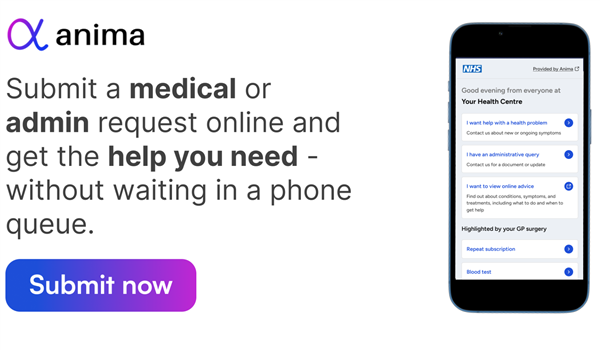
Anima is our online system for contacting the surgery. It gives you a quick and convenient way to tell us what you need without having to wait on the telephone or visit the practice.
You can use Anima for health problems, medication requests and many other queries.
The information you provide helps us understand what you need and direct your request to the right person in the practice team.
Why use Anima?
Anima allows you to:
- Contact the surgery online at a convenient time.
- Avoid waiting in a telephone queue.
- Tell us about your problem in your own words.
- Provide useful information before your request is reviewed.
- Send medication and prescription requests.
- Receive messages and updates from the surgery.
- Help us direct your request to the most appropriate member of the team.
You don't need to know who you need to see or which type of appointment to book – tell us what you need help with and we can work out the most appropriate next step.
What can I use Anima for?
You can use Anima for many of the things you would previously have contacted reception about, including:
- A new health problem
- An ongoing health problem
- Repeat prescriptions
- One-off medication requests
- Questions about your medication
- Fit note requests
- Questions about results
- Administrative queries
- Other requests for help from the practice
Simply write briefly your concern or request and Anima will guide you through the relevant questions. E.g. ‘sore throat’, ‘follow up appointment’, ‘recent test results’
💊 Requesting medication through Anima
Anima can be used for repeat prescriptions, one-off medication requests and medication queries.
The easiest way to submit a medication request is:
1. Choose the top option – “I want help with a health problem”.
2. Start typing what you need, for example:
· Repeat prescription
· One-off medication
· Medication query
Anima will then guide you through a few questions so that we have the information needed to deal with your request.
Ordering several repeat medications?
If you take several regular medications, you don't need to type the name of every item individually.
If you need everything on your repeat medication list, simply write:
“All repeats”
If you need most of your medication but not everything, you can write:
“All repeats except…”
and tell us which medication you don't need.
For example:
“All repeats except my inhaler.”
If you only need one or two particular medications, please give us the medication names where possible.
“I just want an appointment – why do I have to answer questions?”
We understand that sometimes you simply want to know whether you can see or speak to someone.
The questions in Anima help us understand what you need before deciding the most appropriate way to help you.
Not every request needs the same type of appointment or the same member of the practice team. Depending on your request, the next step could be an appointment, advice from a clinician, a prescription, a referral or help from another service.
Providing some information at the beginning helps us make sure you receive the right care from the right person.
What should I tell you?
You don't need to use medical terminology or know what might be causing your symptoms.
Just tell us, in your own words:
- What is happening?
- How long has it been happening?
- Is it getting better or worse?
- Is there anything in particular you are worried about?
- What would you like us to help you with?
The more relevant information you can provide, the easier it is for our team to understand your request.
What happens after I submit my request?
Your request is sent securely to the practice for review.
We will look at the information you have provided and decide the most appropriate next step. This doesn't always mean a GP appointment – another member of the practice team or another service may sometimes be better placed to help you.
We will then contact you to let you know what happens next.
Please keep an eye on your messages after submitting an Anima request, as we may need to ask you for further information or send you advice.
It is also important that the contact details we hold for you are up to date.
Can I send photographs or documents?
Where appropriate, Anima allows you to provide additional information with your request.
A photograph or document can sometimes help us understand what you need and may prevent us having to contact you again for further information.
Please only send photographs or documents that are relevant to your request.
Anima is continuing to improve
Anima is regularly updated and developed to make it easier for patients and practices to use.
The system continues to evolve based on how it is being used and feedback from patients and GP practices, with improvements and new features introduced over time.
This means you may occasionally notice changes to the questions you are asked or the way Anima looks and works.
Can I still speak to reception?
Yes 😊
Anima provides a convenient way to contact us online, but we understand that not everybody can use an online service independently.
If you are unable to use Anima or need help submitting a request, please contact our reception team. We will help you access the service in the most appropriate way.
Please remember that our receptionists may need to ask you some questions about your request. This is so that we can make sure you receive the appropriate help – you are not expected to decide which clinician or appointment you need yourself.
Having problems using Anima?
Please don't worry if you're not confident using online services.
If you are having difficulty accessing Anima, completing the questions or submitting your request, please speak to our reception team.
We would much rather help you use the service than have you go without the care or support you need.
🚨 If you need urgent help
Anima should never delay you from seeking emergency medical help.
If you believe you or somebody else is experiencing a life-threatening medical emergency, call 999.
For urgent medical advice when the surgery is closed, please use the appropriate NHS urgent care service.
Making it easier to contact your surgery
Moving more requests online isn't about creating a barrier between patients and the practice.
Anima helps us gather the information we need at the beginning, manage requests safely and direct patients to the most appropriate person or service.
For many patients, it also means being able to contact the surgery without waiting on the telephone.
And if you need some help using it, our reception team is here to support you.
Vauxhall Practice news and updates

Injectable Weight Loss Management in Wales
The demand for injectable weight loss treatments—such as Mounjaro—is growing across the UK. In response, the Welsh Government has released updated prescribing guidance to ensure medications are used safely and appropriately.
Who Can Prescribe These Medications?
Under current guidance:
- Only specialist weight management services are permitted to prescribe injectable weight loss treatments.
- GPs are not authorised to issue these prescriptions.
This approach ensures patients receive support and monitoring from experienced professionals.
Accessing Weight Management Support
If you feel you may benefit from weight management assistance, you can self-refer to the Adult Weight Management Service provided by Aneurin Bevan University Health Board.
Important Notes for Private Prescriptions
Please be aware:
- Our practice cannot take over prescriptions for weight loss medications obtained through private providers.
- Your private provider is responsible for evaluating your suitability for treatment, as well as handling any required monitoring and follow-up care.
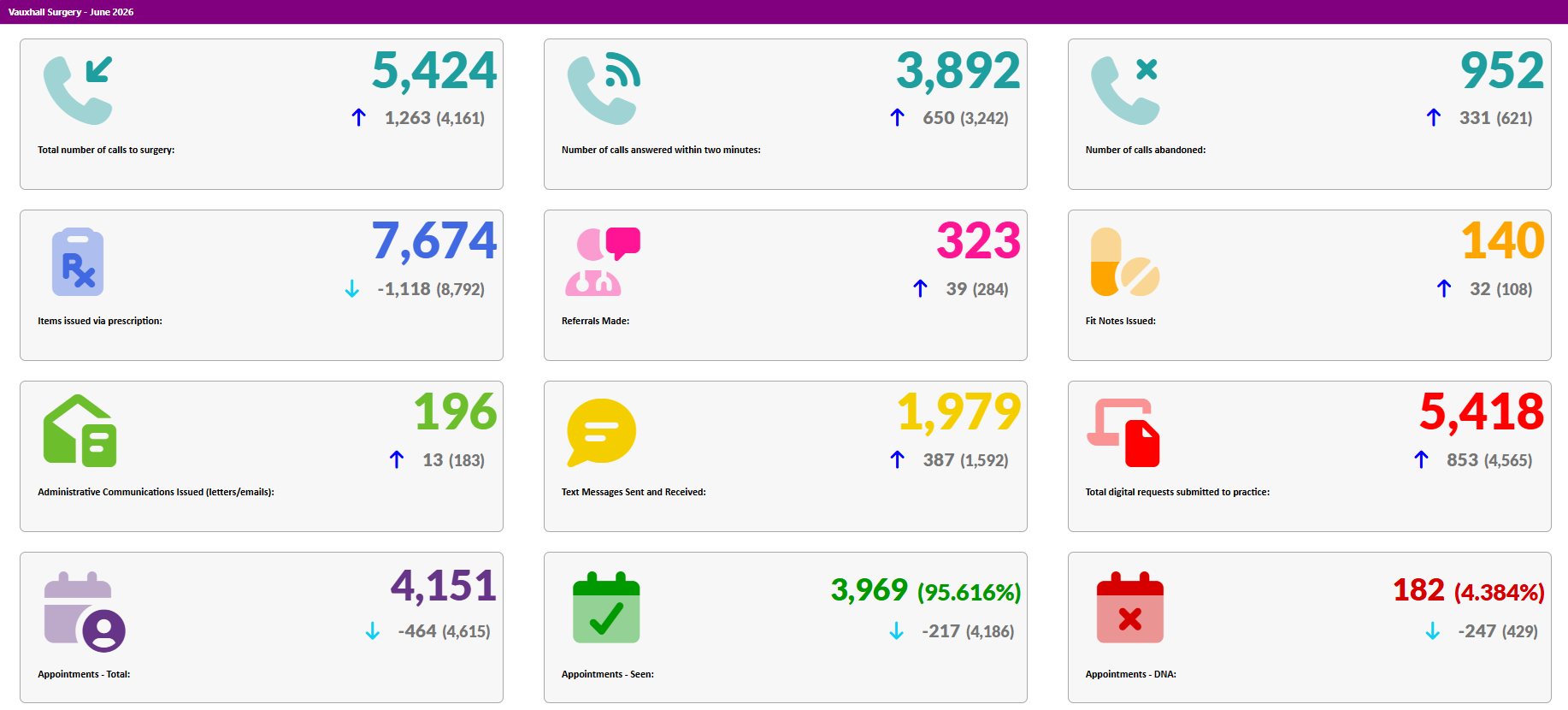
June Activity Data

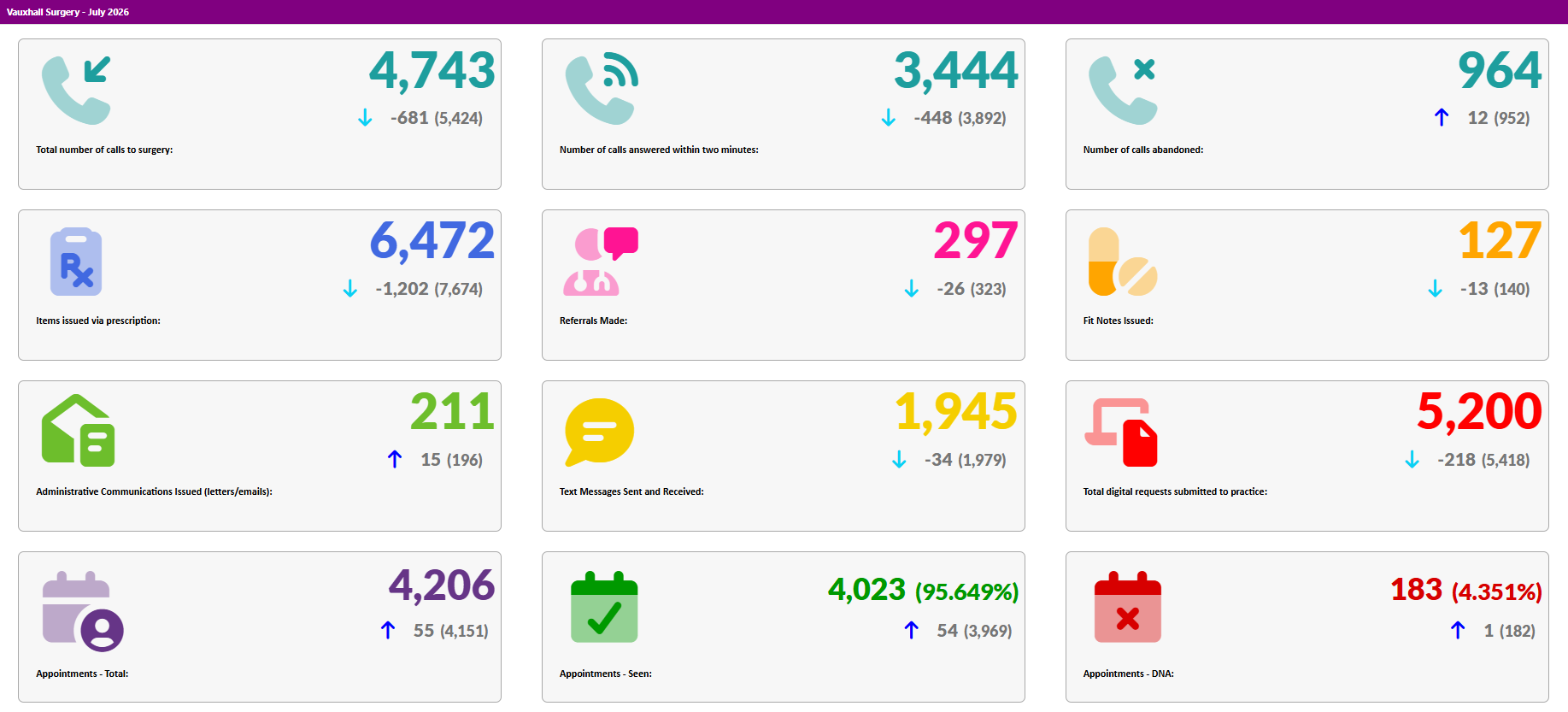
July Activity Data

Chepstow and Tutshill Surgery details
|
Chepstow Vauxhall Lane Chepstow NP16 5PZ 01291 636100 Open Mon to Fri 8am - 6.30pm (doors close at 6pm)
|
Tutshill Coleford Road Tutshill NP16 7BN 01291 636100 Open Mon to Fri 8.30-1pm Mon and Fri 2pm - 5.30pm |
Looking after yourself
NHS 111 Wales Symptom Checkers
If you or someone you care for is feeling unwell, then your first port of call should be to use our online Symptom Checkers. This will help you to choose what to do or who to see next if you experience common health problems like a rash, stomach pain, back pain, cough, headache, vomiting and diarrhoea, or if you are just feeling generally unwell.
Looking after yourself
Self-care is one of the most important things we can do to look after our health. Not only should we have a healthy diet and exercise regularly, but we should also be prepared for any minor illnesses or injuries. Many illnesses and injuries can be treated at home, so keeping a well-stocked first aid kit and medicine cabinet is very handy. Find out what essentials you should be keeping in your home by visiting our Medicine Cabinet. For information on how to look after your physical and mental health, visit Living and Feeling Well.
Mental health and wellbeing services
Mental health is about how we think, feel, and behave. Maybe you have been feeling down or anxious lately. Or maybe you are worried you may harm yourself. If you need advice and support with your mental wellbeing, there are many services available to you – online and over the phone. For more information and access to free, safe resources, visit Mental Health and Wellbeing.
Many support groups and charities also offer advice, confidential counselling, and information about the types of treatment available and where to get help. To find your nearest support service, use our health, wellbeing and support search.
If you look after someone who is ill or disabled, your wellbeing at times may be affected. To find information about services that could help you cope with caring for someone, please visit Carers Wales.
Common Ailments Service
If you have one of the following conditions, a local pharmacy can help:
• indigestion • constipation • diarrhoea • piles • hay fever • head lice • teething • nappy rash • colic • chicken pox • threadworms • sore throat • athlete’s foot • eye infections • mouth ulcers • cold sores • acne • dry eyes • dermatitis • verruca • back pain • vaginal thrush • oral thrush • scabies • ringworm • interigo • ingrowing toenails
Minor Injury Unit (MIU)
If you have an injury that is not serious you can go to a Minor Injury Unit for help, instead of going to A&E. Minor Injury Units can treat injuries ranging from broken bones, dislocations and sprains, to wounds, burns and animal bites. For the type of injuries that Minor Injury Units can treat, visit Minor Injury Unit.
To find your nearest Minor Injury Unit, use our hospital search and filter your results by selecting ‘Minor Injury Unit’. We advise you to check the opening hours of the Minor Injury Unit first.
A&E / Hospital
In A&E, people with serious or life-threatening emergencies are prioritised for treatment. You should not go to A&E unless you or someone you care for is having a serious or life-threatening emergency.
Hospitals offer a wide range of treatment which is generally arranged through your GP, dentist or optician. You may attend hospital as:
- An outpatient (you will have an appointment with a specialist but will not stay overnight).
- A day patient (you will be given a hospital bed for tests or surgery but will not stay overnight).
- An inpatient (you will stay in hospital for one night or more for tests, medical treatment, or surgery).
Treatment at NHS hospitals is free. However, if you are not a resident of the UK, please visit the Welsh Government website.
To find your nearest hospital, use our hospital search. Not all hospitals offer the same services, so select ‘services offered’ to find what treatment your hospital can provide.
For more information, visit Hospital Appointments, Admission, and Discharge.
Dentist
Your dentist can help you with routine check-ups, treatment, and dental emergencies. The following are classed as dental emergencies:
- Dental bleeding that will not stop.
- Acute spreading infection (swelling of the lip, tongue, or cheek).
- Damage to teeth or jaws because of an accident.
Toothache, no matter how bad, is not classed as a dental emergency. For more information on how you can help yourself with this dental problem, visit Toothache. Alternatively, you can use our Dental Symptom Checker.
If you would like advice on pain relief, you should contact your dentist. To find your nearest dentist, use our dentist search. If you cannot find an NHS dentist and require urgent treatment, please contact your local dental helpline – to find the number for your area visit Dental Services.
For more advice on dental services, including information on NHS and private dentists, registration, and costs of different treatment, visit FAQ on Dentists.
If you are looking for advice on teething for your little one, please visit Teething.
Optician
Your eyes rarely hurt when something is wrong with them, so it’s important to have regular eye tests to make sure that they are healthy.
If you are having problems with your eyes, your optician can help you. This could be by carrying out eye examinations, giving advice on visual problems, prescribing glasses and contact lenses, and referring cases of eye disease where appropriate.
When you go for an eye test, you will be examined by an Optometrist or Ophthalmic Medical Practitioner (OMP) – both of which are professionals trained in eye abnormalities and conditions. To find your nearest optician, use our eye-care search.
Page created: 13 November 2024